Our goal is to carry out cutting‑edge and relevant research on land use and impacts on biodiversity which often concerns regions far away from Berlin. We aim to minimize the environmental impact of our work with responsible travel! Take a look at our Responsible Travel Statement and at the 2025 emissions report here!

Under future climate scenarios, snow leopard habitat and pastoralist distribution are projected to shift differently in Kyrgyzstan and Tajikistan. These contrasting outcomes suggest that climate change may exacerbate human–wildlife conflict in some landscapes while creating opportunities for wildlife restoration and lower conflict in others, emphasizing the need for context-specific conservation approaches.

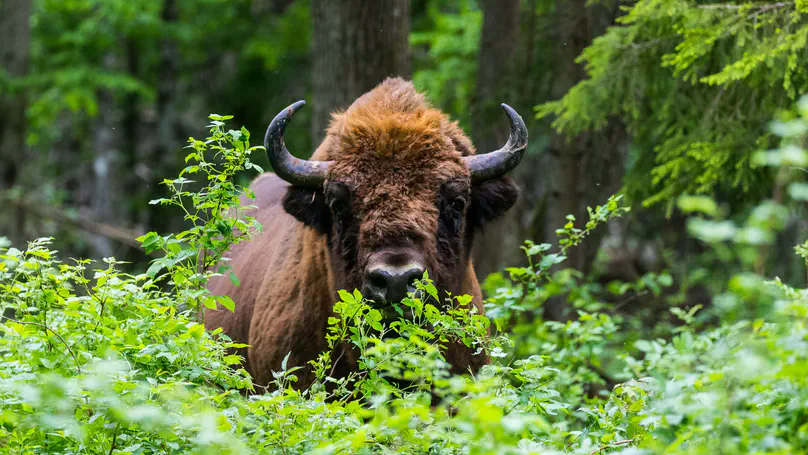
We compiled the largest European bison GPS tracking dataset to assess habitat preferences across European contemporary landscapes. We found that bison are much generalist in their behavior, selecting for habitats according to their availability. However, we found quite a strong exception for croplands, which especially during the non-growing season are strongly preferred. For this reason, we advocate for future reintroduction and conservation initiatives to assess habitat availability and conflict potential, rather than aiming at reintroducing European bison in specific habitat types relative to their ecology or/ and historical distribution.

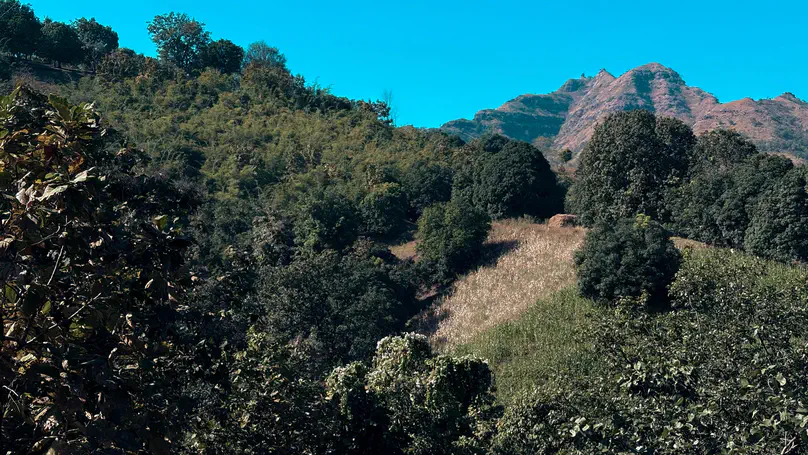
Megafauna are among the most challenging conservation targets, especially in India’s pressured tropical dry woodlands. In this study, we found that tropical dry woodland cover and protected area coverage were positively associated with all six megafauna species, underscoring the importance of safeguarding contiguous woodland patches in human-dominated landscapes Similarly, while woody cover was positively associated with all species, human activities or presence were stronger predictors for several of them, indicating their ability to adapt to human use of shared landscapes. Finally, historical woodland change showed legacy effects, with greater past loss linked to higher contemporary megafauna presence. Our study shows that Indian megafauna can coexist with people across diverse social-ecological conditions, provided that sufficient refuge habitats such as protected areas and contiguous forests are maintained or restored.

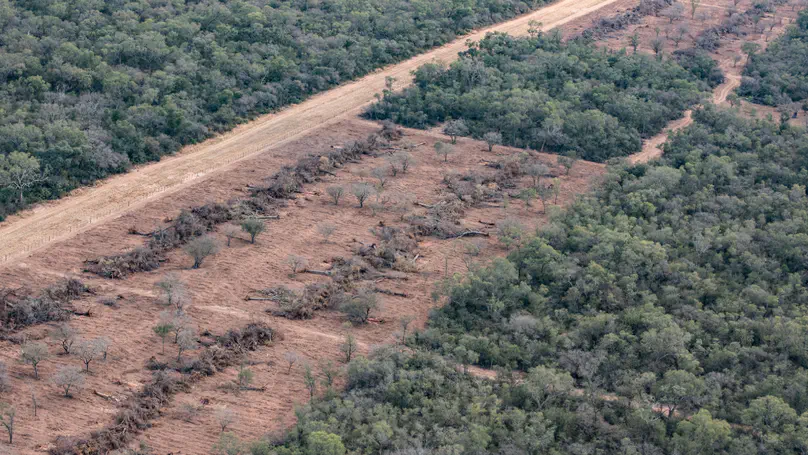
Agricultural expansion in the South American Chaco is reshaping snake communities. While some generalist species gained ground, many specialists lost habitat and diversity declined overall. The study reveals a strong trend toward biotic homogenization.

Sometimes socioeconomic conditions change suddenly, such as during wars, financial crises or when a pandemic breaks out. Such shocks can affect large carnivores, although this has been rarely studied. Here we describe how shocks affect carnivore populations, using a social-ecological approach, and three case studies: (1) economic sanctions in Iran and their effects on the Asiatic cheetah; (2) global commodity price crashes and how they influenced jaguar populations in Bolivia, and finally (3) the collapse of the Soviet Union and its consequences for snow leopards in Kyrgyzstan.

A very warm welcome to Camilla Brunet who recently joined the lab to pursue her doctoral studies, where she will investigate how changes in agricultural land use can influence the behavior of large mammals. Camilla is a conservation-behavior scientist interested in how animals move and interact with their environment. Her academic background is in wildlife management and conservation, with special experience in movement analysis through GPS tracking and behavioral monitoring. We’re thrilled to have you on board!

Based on an extensive interview survey, we identify five main types of land-use agents in the Argentine Chaco. The classification relies on their capital assets, land management practices, and personal attributes. These dimensions were central to capturing differences among actors and avoiding oversimplification

Big sustainability projects often drown in scattered data. Our solution? Shared social-ecological units that anchor research across disciplines. Guided by four principles—scale, gradients, open data, and flexibility—we built a transparent sampling framework. Tested in Rwanda with we envision the framework to unlock true cross-team integration.

Our study combined participatory mapping with spatial analyses. We revealed an alarming average loss of about a fifth of the forest on which more than 400 Indigenous communities depend. Overall ecosystem functionality was also severely affected in the areas on which communities depend. Where agriculture expands, communities face a substantially decreasing access to remaining forests as well as to water sources. Our results highlight the compounded challenges faced by these communities, emphasizing the need for policies to prevent ecological marginalization of forest-dependent communities