Space use of a diverse megafauna community in a rewilding area in the southwestern Carpathians
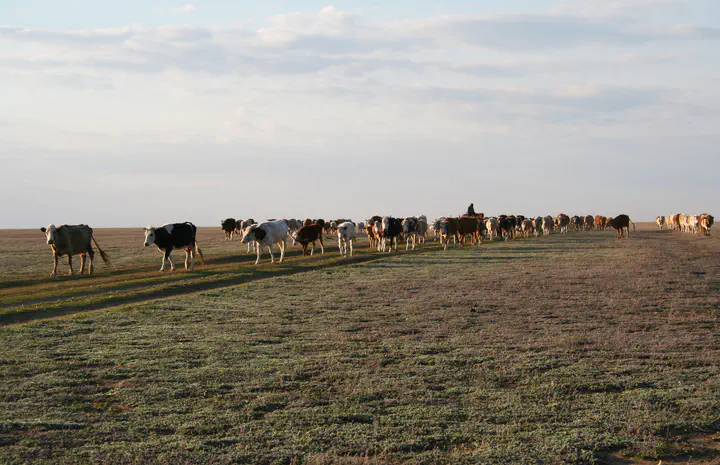 © Johannes Kamp
New paper led by Brett Hankerson of the IAMO out now in Regional Environmental Change.
It is affiliated to the BALTRAK project, which investigated the effects of land use change on biodiversity in the Eurasian steppe.
Widely considered the domain of natural weather and climate forces—or careless humans—grassland fires have a very strong, negative correlation with grazing, advocating the use of targeted grazing for wildfire mitigation.
We used comprehensive Kazakh livestock numbers and grazing requirements to create an accurate picture of temporal and spatial changes in grazing patterns. Statistical analysis showed the largest increase in explanatory power in models that included grazing demand.
See the full paper here: Hankerson, B., Schierhorn, F., Kamp, J., Kuemmerle, T., & Mueller, D. (2025). Changes in grazing patterns explain post-Soviet fire trends on the Eurasian steppe better than climate. Regional Environmental Change, 25, 96.