Megafauna persistence is shaped by habitat refuges, human presence, and land use histories.
 © Conservation Biogeography Department
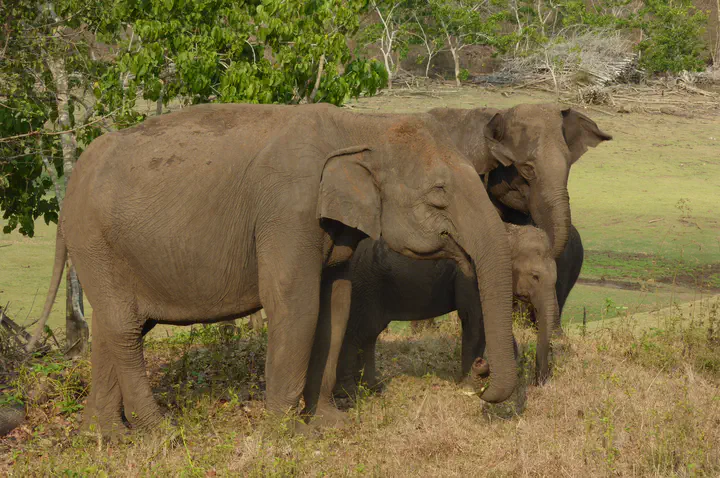
Megafauna in tropical dry woodlands face mounting pressures from habitat loss and human activity, yet many persist. We found that their survival is strongly linked to refuge habitats, with protected areas and contiguous woodland cover acting as key factors in shared, human-dominated landscapes.
Similarly, while woody cover supported all species, human-related factors were stronger predictors for leopards, sloth bears, dholes, and gaurs. Importantly, historical woodland loss continues to shape current distributions, with past decline linked to a higher presence of all species studied.
Collectively, our results highlight that Indian megafauna can coexist with people across a wide range of social-ecological conditions provided that sufficient refuge habitats remain.
See the full paper here: Kalam, T., Pratzer, M., Suryawanshi, K. R., Liu, X. and Kuemmerle, T. (2025), Social-ecological determinants of contemporary megafauna distributions in Indian tropical dry woodlands. Ecology and Society, 30(4):30.