What happens to large carnivores when human societies experience shocks?
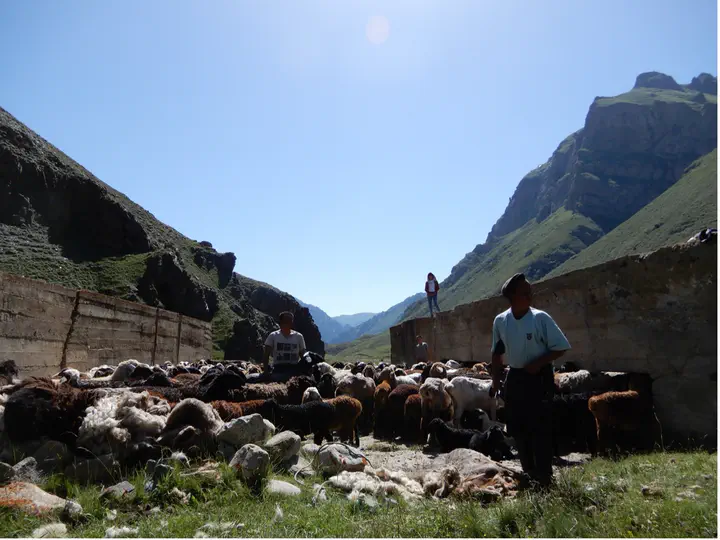 © Ranjini Murali
1.Socio-economic shocks—wars, financial crises, state collapse—reshape human systems. Would this also affect large carnivores? In our new paper we ask: through which pathways do shocks affect large carnivores.
2.Why large carnivores? They’re ecological keystones, cultural icons, economic flashpoints, and umbrella species. Understanding their responses to shocks can guide protections for them, their habitats, and biodiversity more broadly.
3.We take a social-ecological lens (people–nature interactions) across three cases: (1) Economic sanctions in Iran → Asiatic cheetah; (2) Global commodity price crashes in Bolivia → jaguars; (3) Post-Soviet transition in Kyrgyzstan → snow leopards.
4.Across cases, shocks disrupted actor configurations, formal and informal rules, which affected actor behaviour and in turn habitat and prey species, and ultimately carnivore populations. Result: higher risks for carnivores in our case studies
5.Our findings highlight an important point: as the world faces increasing uncertainty, including the impacts of climate change, we need stronger, more flexible conservation approaches closely involving local communities, that can continue protecting large carnivores even during times of crisis.