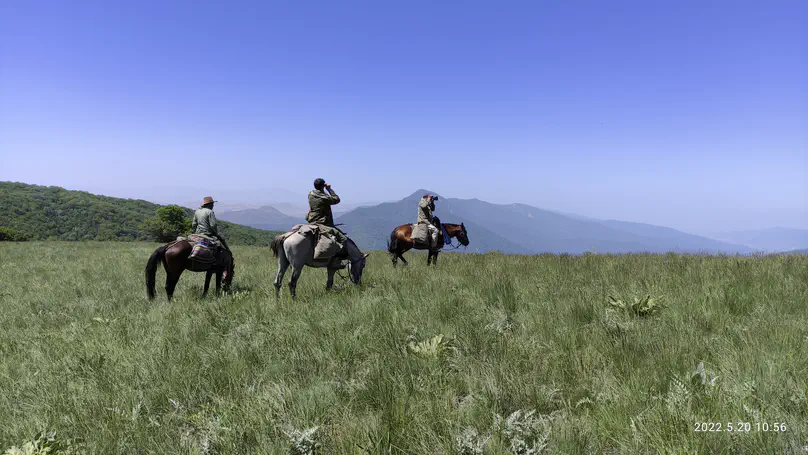
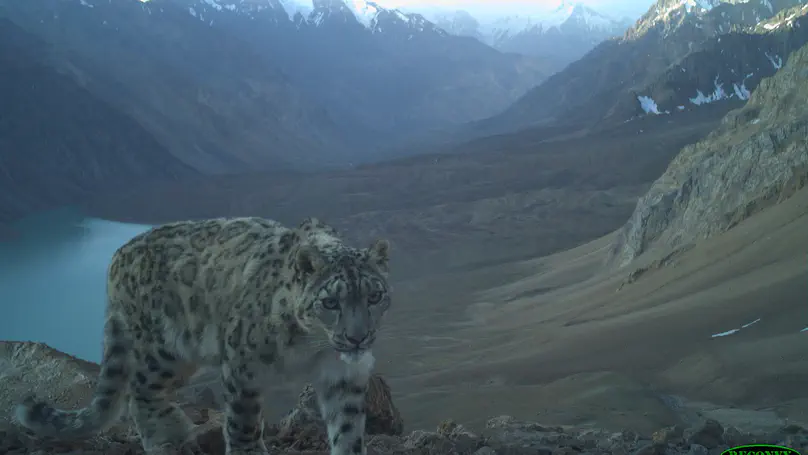
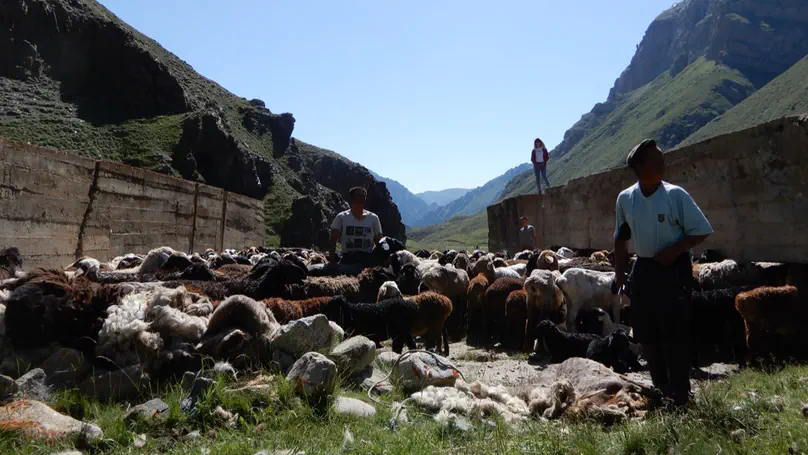
Sometimes socioeconomic conditions change suddenly, such as during wars, financial crises or when a pandemic breaks out. Such shocks can affect large carnivores, although this has been rarely studied. Here we describe how shocks affect carnivore populations, using a social-ecological approach, and three case studies: (1) economic sanctions in Iran and their effects on the Asiatic cheetah; (2) global commodity price crashes and how they influenced jaguar populations in Bolivia, and finally (3) the collapse of the Soviet Union and its consequences for snow leopards in Kyrgyzstan.

A very warm welcome to Camilla Brunet who recently joined the lab to pursue her doctoral studies, where she will investigate how changes in agricultural land use can influence the behavior of large mammals. Camilla is a conservation-behavior scientist interested in how animals move and interact with their environment. Her academic background is in wildlife management and conservation, with special experience in movement analysis through GPS tracking and behavioral monitoring. We’re thrilled to have you on board!

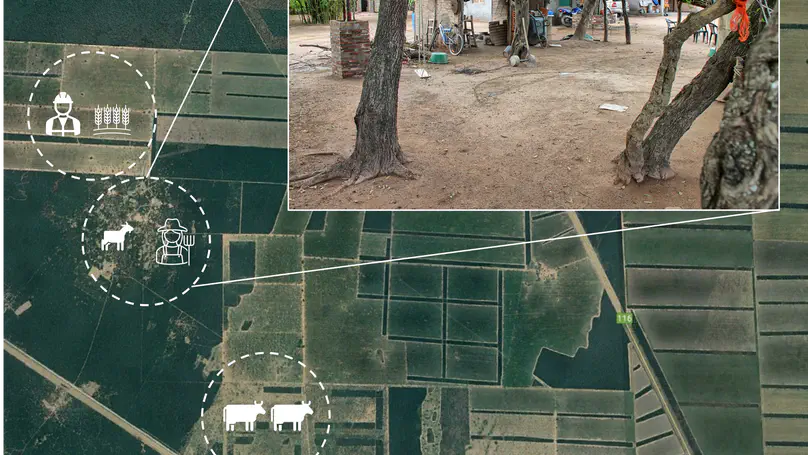
Based on an extensive interview survey, we identify five main types of land-use agents in the Argentine Chaco. The classification relies on their capital assets, land management practices, and personal attributes. These dimensions were central to capturing differences among actors and avoiding oversimplification

Big sustainability projects often drown in scattered data. Our solution? Shared social-ecological units that anchor research across disciplines. Guided by four principles—scale, gradients, open data, and flexibility—we built a transparent sampling framework. Tested in Rwanda with we envision the framework to unlock true cross-team integration.

Our study combined participatory mapping with spatial analyses. We revealed an alarming average loss of about a fifth of the forest on which more than 400 Indigenous communities depend. Overall ecosystem functionality was also severely affected in the areas on which communities depend. Where agriculture expands, communities face a substantially decreasing access to remaining forests as well as to water sources. Our results highlight the compounded challenges faced by these communities, emphasizing the need for policies to prevent ecological marginalization of forest-dependent communities

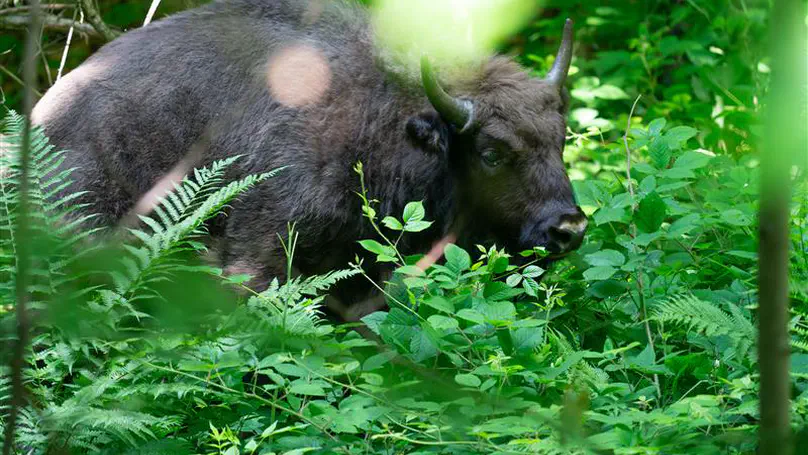
Megafauna are recovering despite persisting human activities in many landscapes. Our study highlights the capacity of low-pressure landscapes to support diverse megafauna communities, underscoring their potential to restore lost species.

We used comprehensive Kazakh livestock numbers and grazing requirements to create an accurate picture of temporal and spatial changes in grazing patterns. Statistical analysis showed the largest increase in explanatory power in models that included grazing demand

We use satellite imagery and active learning to map where cattle are confined—a sign of intensified production—across South America’s 3.7 million km² dry diagonal. We identify thousands of feedlots, concentrated animal feeding operations, and supplementary feeding sites, revealing that confinement-based cattle production is widespread. We reveal that feedlots are mainly found in cropland-rich, low-deforestation areas, while supplementary feeding sites are linked to higher deforestation. Our approach accurately distinguishes these systems, offering new insights into the geography of ranching intensification, its environmental impacts, and its connection to deforestation.

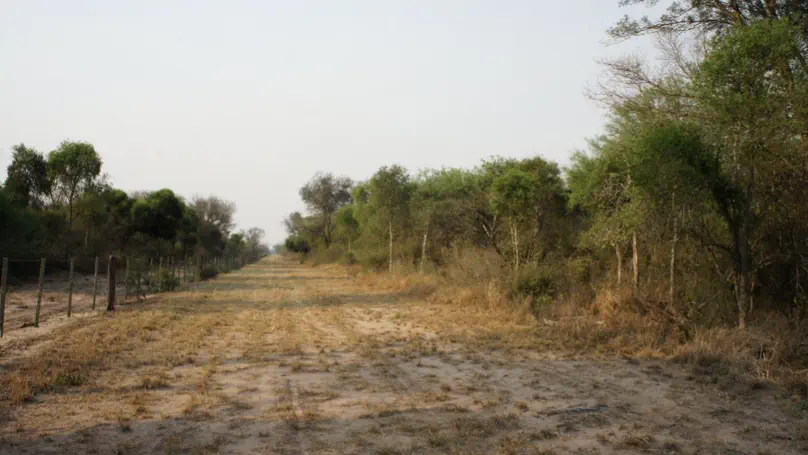
The expansion of commodity agriculture is the leading driver of deforestation globally, which makes it crucial that we capture it accurately. Yet the way we monitor agricultural commodity frontiers typically overlooks early dynamics of land claiming that precede deforestation. As a result, agricultural frontiers only become apparent when it is too late. Here, we develop an approach to map land claiming and apply it to the Gran Chaco, a global deforestation hotspot. We reveal that land claiming extends well beyond deforestation fronts and into what would appear like intact forests. Our approach can serve as a tool for the targeting of policies to protect dry woodlands and the many people who depend on them.